Start by lining two large baking sheets with parchment paper or silicone macaron mats. In a large bowl, sift together the almond flour, 1 ¾ cups of powdered sugar, ginger, cinnamon, cloves, and nutmeg. It is important to sift these ingredients twice to ensure there are no lumps, which helps create a smooth, professional-looking macaron shell.
In a clean glass or metal bowl, beat the egg whites on medium speed until they become frothy. Gradually add the granulated sugar one tablespoon at a time while increasing the mixer speed to high. Continue beating until stiff, glossy peaks form, meaning the mixture stands straight up when you lift the beaters. Do not overbeat, or the meringue will become dry and grainy.
Gently fold the dry ingredients into the meringue using a spatula. This is the most critical stage, often called macaronage. Use a circular motion, cutting through the center and scraping the sides of the bowl. Continue folding until the batter reaches a lava-like consistency, where it flows slowly off the spatula in a continuous ribbon without breaking.
Transfer the batter into a piping bag fitted with a medium round tip. Pipe circles about 1.5 inches in diameter onto the prepared baking sheets, leaving space between each one. After piping, firmly tap the baking sheets on the counter a few times to release any trapped air bubbles. Use a toothpick to pop any bubbles that remain on the surface.
Let the macarons sit at room temperature for about 30 to 60 minutes. They are ready when a thin skin forms on top and they are no longer sticky to the touch. Preheat your oven to 300 degrees Fahrenheit. Bake the shells for 15 minutes, one tray at a time. Let them cool completely on the baking sheet before attempting to remove them.
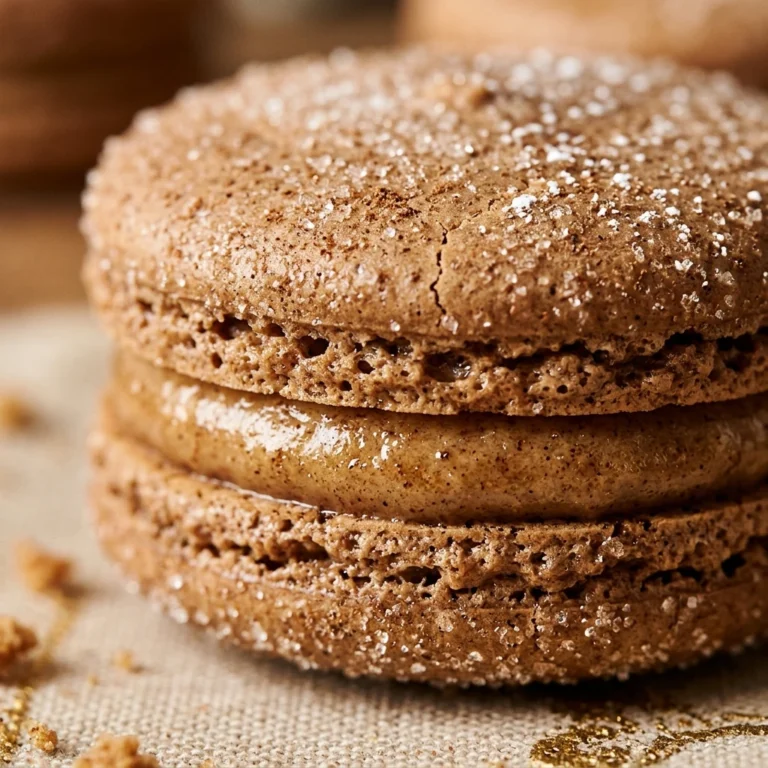
To make the filling, beat the softened butter until creamy. Add the 1 ½ cups of powdered sugar, molasses, alcohol-free vanilla, and a pinch of extra ginger or cinnamon. Mix until smooth, adding milk if needed to reach a pipeable consistency. Match the cooled shells by size, pipe a small dollop of filling onto the flat side of one shell, and sandwich it with another.